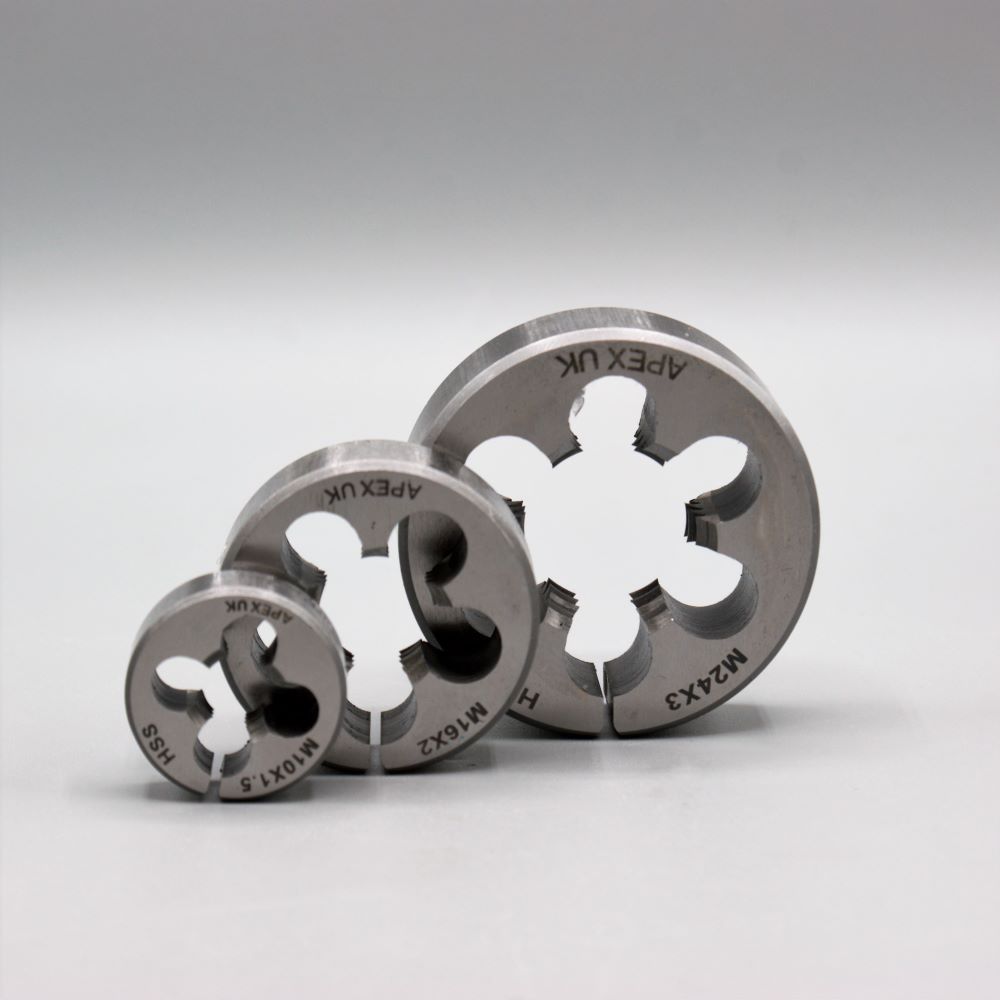
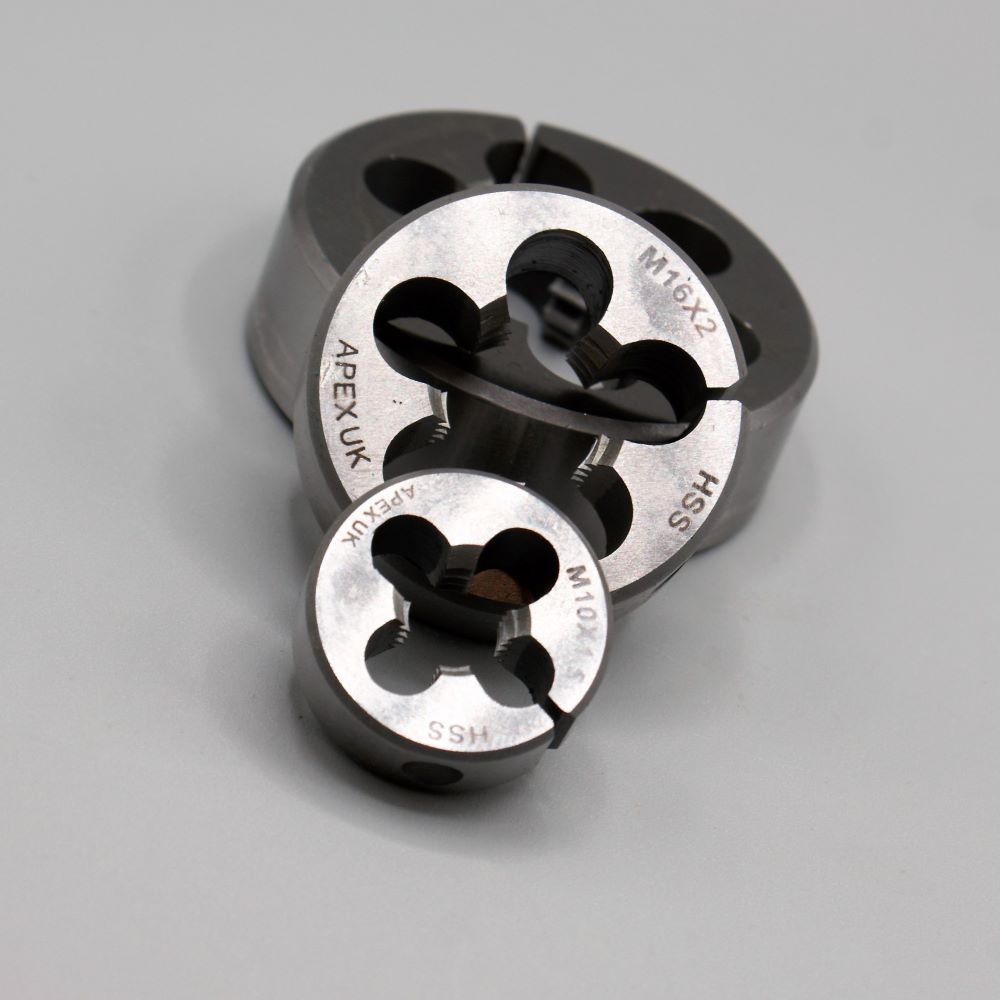
Metric & Imperial Thread Cutting Dies
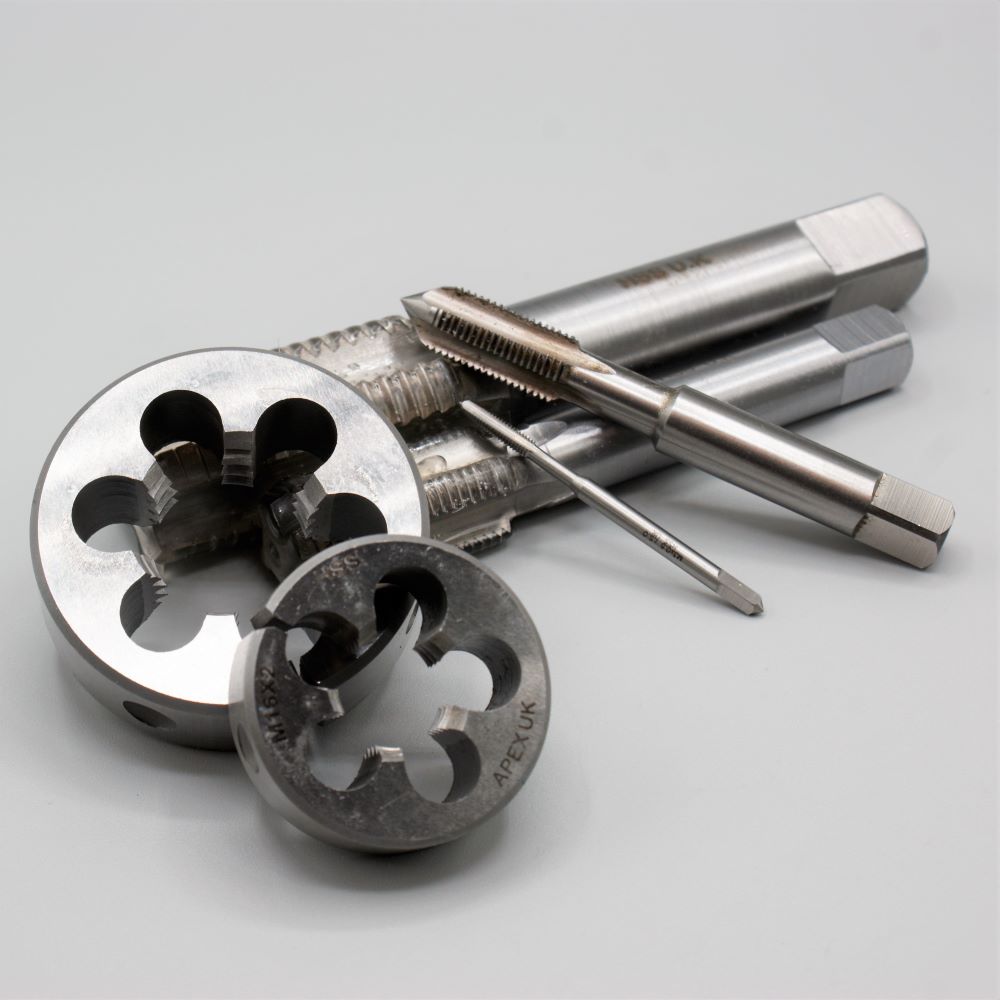
Our Metric & Imperial Dies range provides engineers, machinists and workshop users with reliable tools for cutting accurate external threads on rods, studs and cylindrical components. A die produces a male thread — functioning like a bolt — and is essential for repair work, fabrication, maintenance and production environments.
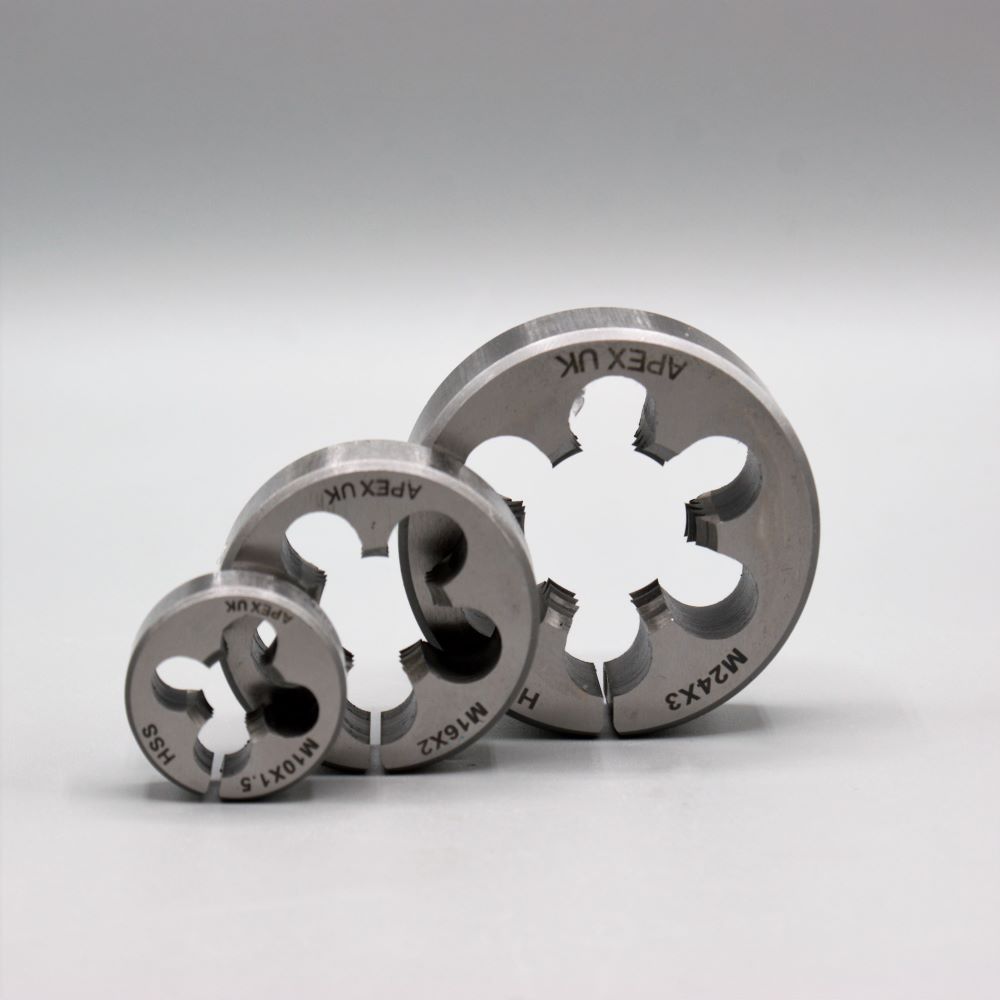
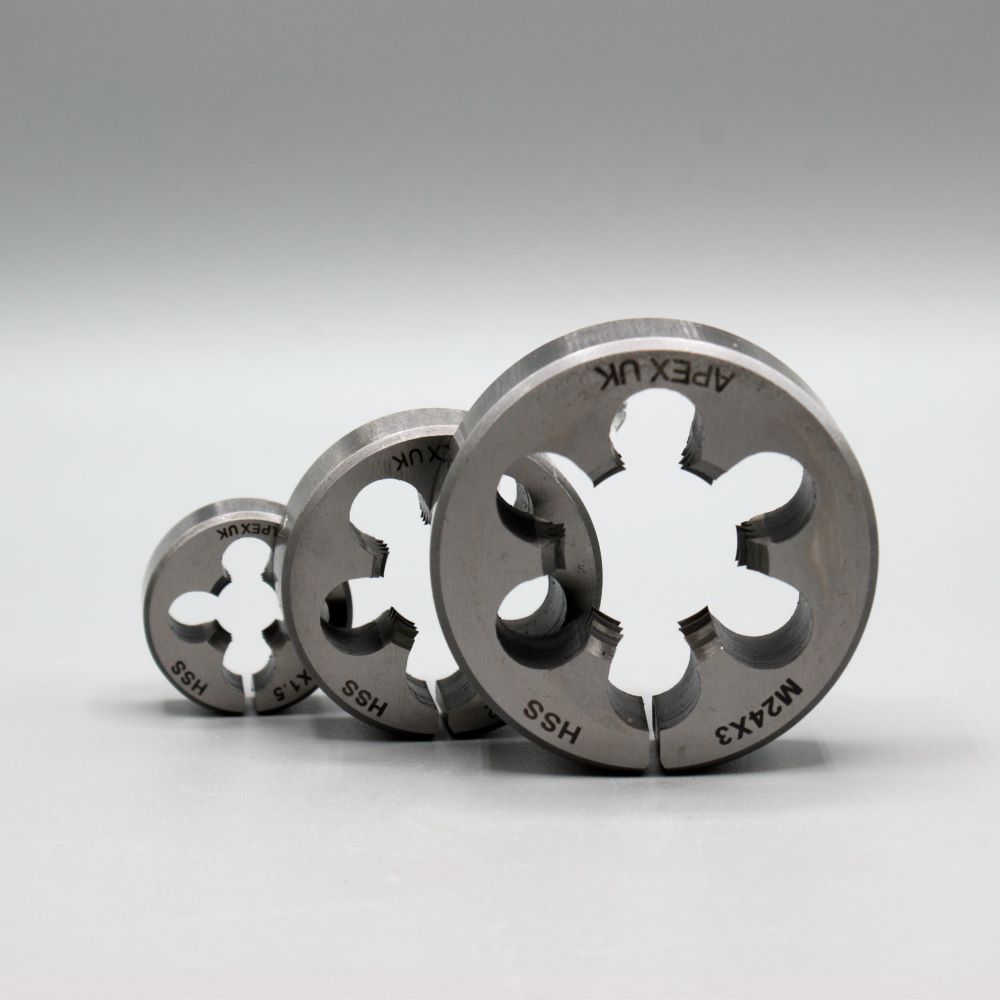
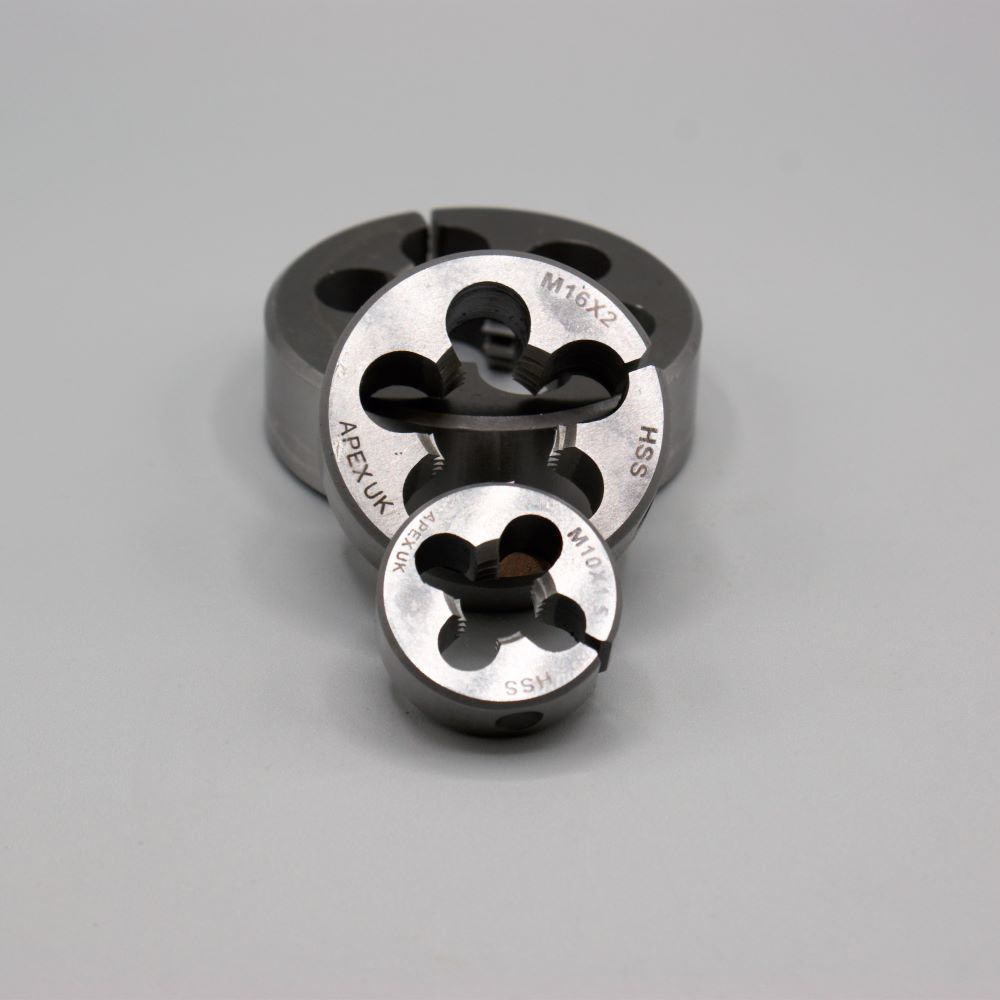
We supply both solid dies and adjustable split dies. Solid dies (often called die nuts) cut a nominal thread form and depth, with accuracy depending on manufacturing precision and wear. Split dies can be expanded or compressed slightly using integrated screws or die‑stock screws, allowing compensation for wear or achieving different thread fit classes. This makes them ideal for achieving tighter tolerances or refreshing worn threads.
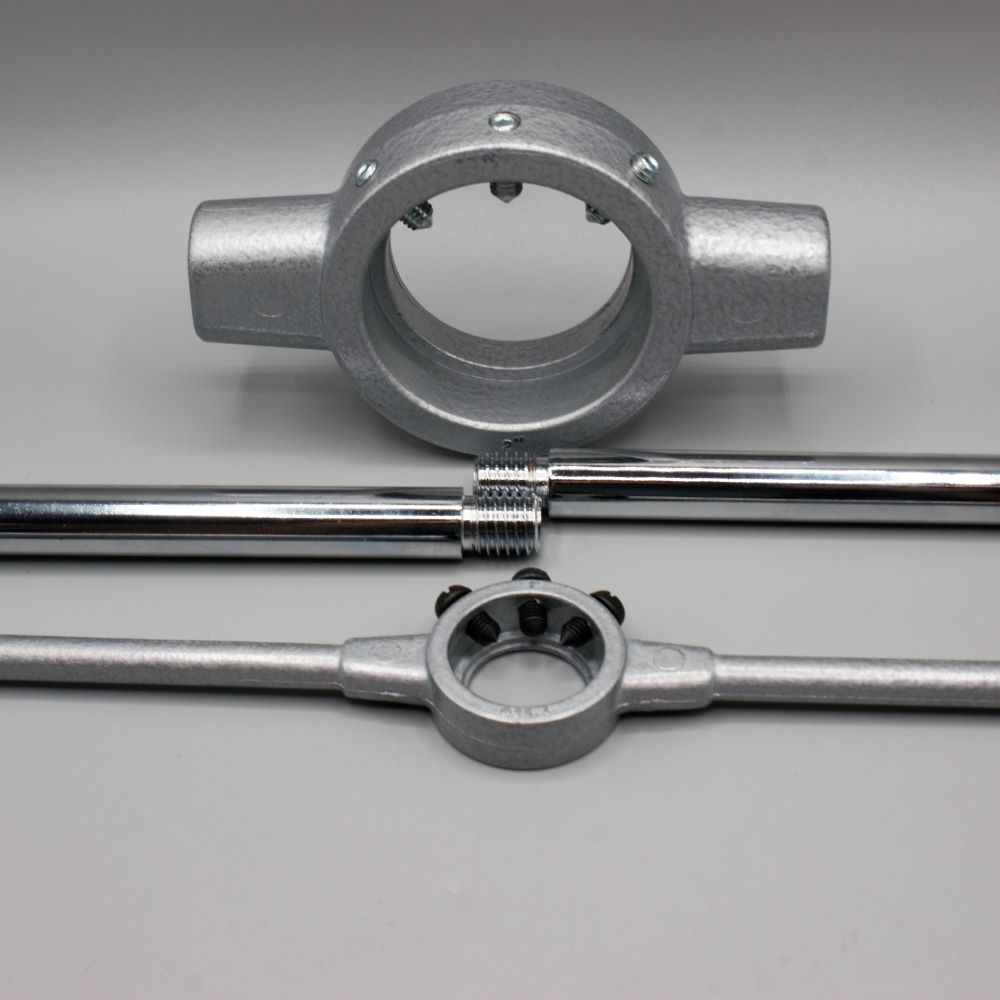
Our range covers metric, imperial, BSF, UNC, UNF, BSPF, BSW and other common engineering thread forms, ensuring compatibility with machinery, automotive components and general workshop requirements. We also supply die holders for secure, accurate threading control.
Transpower Drives supports customers across Wellingborough, Northampton, Kettering, Corby, Rushden and the wider Northamptonshire area, with fast nationwide delivery available for engineering firms, automotive workshops and manufacturing sites throughout the UK. Whether you’re cutting new threads or restoring existing ones, our metric and imperial dies provide dependable performance backed by trusted engineering quality.
If you need help selecting the correct die type or thread form for your application, our team can provide technical guidance and local support.
A die cuts an external thread on cylindrical material, such as a rod, which creates a male threaded piece that functions like a bolt. Dies are generally made in two styles: solid and adjustable. An adjustable die may be adjusted either by an integrated screw or by a set of screws set into the die holder (termed a "die stock"). Integral adjusting screws may be arranged to work axially, where the movement of the adjusting screw into a threaded hole in the die forces the slit section of the die open, or tangentially, where a screw-threaded into one side of the slit bears against the opposite side of the slit. Dies without integrated screws are adjusted inside the die stock by radially arranged screws.